Journey Through North Africa’s Roman Ruins: A Comprehensive Guide for Maghrebi Diaspora Travelers
Introduction
As members of the Maghrebi diaspora, we take immense pride in our rich heritage and history. One aspect that deeply connects us is the legacy of ancient Rome, which left a profound impact on North Africa. This guide aims to inspire and inform you about uncovering the Roman ruins scattered across the region, providing an invaluable opportunity to reconnect with our roots.
In this journey through time, we’ll delve into the history of these magnificent structures, exploring the grandeur of the Roman Empire’s African provinces. From the breathtaking amphitheaters and intricate mosaics to imposing fortresses and elaborate bathhouses, each site offers a unique glimpse into the daily lives of ancient civilizations.
Roman Ruins in Tunisia
Carthage
Once the greatest city of North Africa, Carthage was established by Phoenicians more than a thousand years before Rome’s rise. Under Roman rule, it became an essential center of trade and culture. Explore the fascinating remains of the Antonine Baths, the Byrsa Hill, and the Bardo Museum, which houses one of the world’s most extensive collections of Roman mosaics.
As you wander through the ancient streets, imagine the bustling marketplaces, where merchants traded exotic spices and precious metals. Visualize the grandeur of the Roman theater, where performances entertained the crowds, and the impressive fortifications that protected this strategic city from invaders.
Dougga
Located in northwestern Tunisia, Dougga is a well-preserved Roman city that was once a provincial capital. Walk through the impressive theater and circus, marvel at the intricate mosaics in the house of Antonius Plemon, and climb to the top of Jebel el-Aoua to take in breathtaking views of the ruins below.
As you explore Dougga’s ancient streets, you’ll discover a glimpse into the daily lives of its Roman inhabitants. Wander through the remains of bathhouses, where citizens would gather to socialize and relax, and visit the impressive city walls that once protected this thriving metropolis.
El Djem
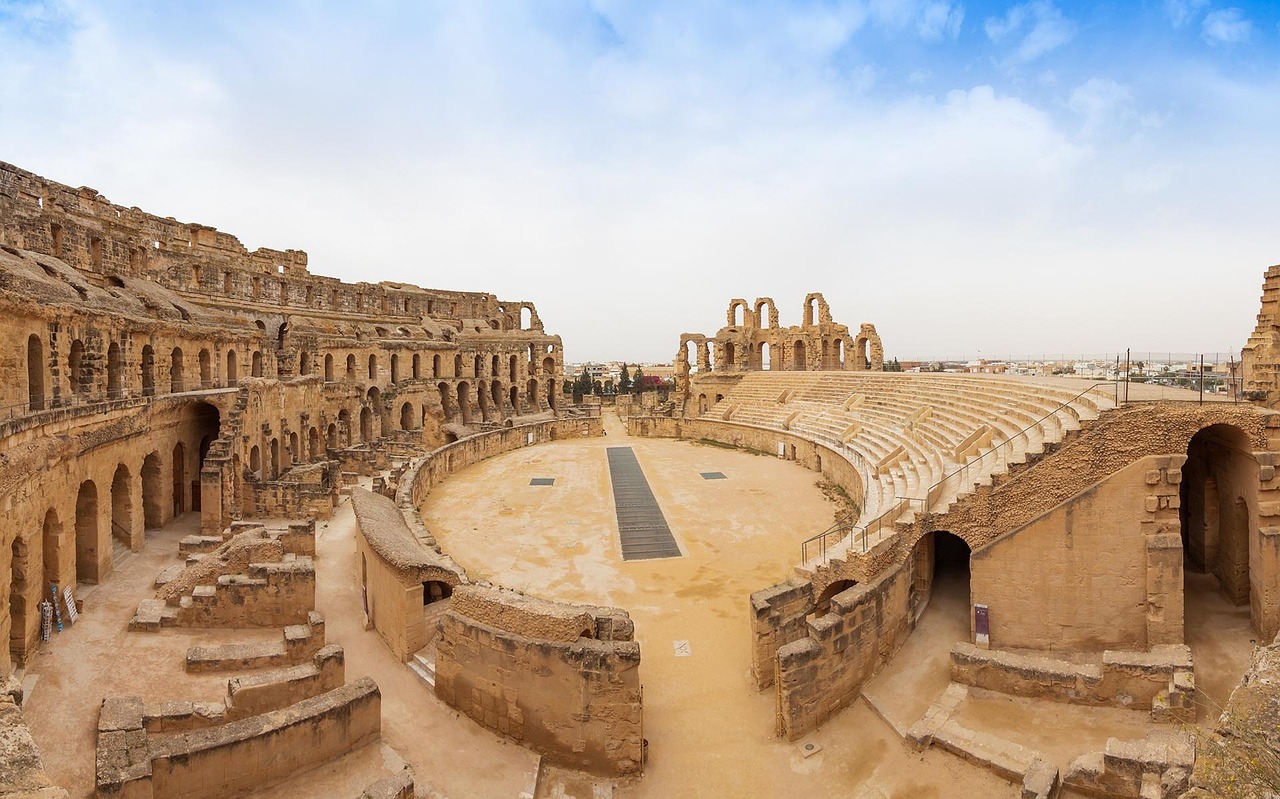
In El Djem, you will find one of the most impressive Roman amphitheaters outside Italy. Known locally as Maccha el-Mouda, this colossal structure could accommodate up to 35,000 spectators and was used for gladiatorial games, mock sea battles, and other public events.
Imagine the roar of the crowds, the clash of steel on steel, and the thrill of the performances. As you walk through the ancient arena, you’ll be transported back in time to an era of grandeur and spectacle.
Roman Ruins in Algeria
Tipaza
A UNESCO World Heritage Site, Tipaza offers a wealth of Roman ruins spread across its picturesque coastline. Explore the ancient Roman villas, aqueducts, and bathhouses while enjoying the stunning Mediterranean views.
As you wander through Tipaza’s ancient streets, you’ll discover the remnants of a once-thriving city, where merchants traded goods and citizens enjoyed leisurely pursuits. Take in the breathtaking views of the sea and imagine the daily lives of Roman inhabitants who called this charming coastal town home.
Djémila
In Djémila, you can wander through the well-preserved ruins of Cuicul, a Roman city established in 100 AD. The city’s most iconic landmark is the magnificent theater, which once held 3,000 spectators. Don’t miss the House of the Vettii, featuring stunning mosaics depicting daily life during the Roman era.
As you explore Cuicul’s ancient streets, you’ll discover a glimpse into the daily lives of its Roman inhabitants. Wander through the remains of bathhouses and temples, where citizens would gather to socialize and relax, and visit the impressive city walls that once protected this thriving metropolis.
Timgad
Founded by Emperor Trajan in 100 AD, Timgad is a remarkably well-preserved Roman city nestled in the Aurès Mountains. The city’s impressive architecture includes an amphitheater, basilica, and several temples dedicated to various gods and goddesses.
As you wander through Timgad’s ancient streets, you’ll discover a glimpse into the daily lives of its Roman inhabitants. Explore the remains of bathhouses and temples, where citizens would gather to socialize and relax, and visit the impressive city walls that once protected this thriving metropolis.
Roman Ruins in Morocco
Volubilis
Discover the ruins of Volubilis, a Roman city that once served as the capital of the region. The site is best known for its elaborate mosaics and the striking remains of a basilica, triumphal arch, and various temples dedicated to Roman deities.
As you wander through Volubilis’ ancient streets, you’ll discover a glimpse into the daily lives of its Roman inhabitants. Explore the remains of bathhouses and temples, where citizens would gather to socialize and relax, and visit the impressive city walls that once protected this thriving metropolis.
Lixus
Located near Rabat, Lixus was one of the Phoenician colonies that later came under Roman control. The ruins include a temple dedicated to Hercules and a Roman necropolis.
As you explore Lixus’ ancient streets, you’ll discover a glimpse into the daily lives of its Roman inhabitants. Visit the remains of temples and bathhouses, where citizens would gather to socialize and relax, and take in the stunning views of the surrounding landscape.
Chellah
Although primarily a medieval site, Chellah in Rabat contains remnants of Roman origins, including columns and mosaics. The site also boasts a beautiful garden filled with olive trees, cypresses, and vibrant flowers.
As you wander through Chellah’s ancient streets, you’ll discover a glimpse into the daily lives of its medieval inhabitants. Explore the remains of temples and bathhouses, where citizens would gather to socialize and relax, and take in the stunning views of the surrounding landscape.
MENA Advisory
Traveling to North Africa can present unique challenges, so it’s essential to be aware of the current political climate and any safety concerns. The Middle East and North Africa (MENA) region is diverse, with varying levels of stability across countries. We recommend checking the latest travel advisories from your country’s foreign affairs department before planning your trip.
- Research your destination thoroughly to familiarize yourself with local customs and laws
- Stay informed about any political or security developments in your intended travel destinations
- Register with your country’s embassy or consulate in the region to ensure they can provide assistance if needed
A Call to Action
We hope this guide inspires you to explore North Africa’s rich Roman heritage and reconnect with our shared history. As members of the Maghrebi diaspora, we have a unique opportunity to honor our roots while fostering a deeper understanding of our collective past.
Pack your bags, embark on this unforgettable journey, and create memories that will last a lifetime. Whether you’re a history buff, an architecture enthusiast, or simply looking for a unique travel experience, North Africa’s Roman ruins await your arrival.
You might also enjoy
Related Articles
- Henna Tattooing in North Africa: A Modern Guide for the Maghrebi Diaspora
- Exploring North African Youth Culture through Moroccan Photography: A Visual Journey for the Maghrebi Diaspora
- Journey Through Time: Exploring North African Roman Ruins
- Exploring Trends and Demands in the Halal Skincare Industry in France: A Comprehensive Guide for Maghrebi Diaspora Readers
- Navigating the Evolving Status of Maghrebi Diaspora in France: A Comprehensive Guide