Unveiling Moroccan Art History and Culture: A Journey for Maghrebi Diaspora
As we embark on this captivating journey through the rich tapestry of Moroccan art history and culture, I invite you to join me in exploring the fascinating stories, stunning artworks, and vibrant traditions that have been passed down through generations. This expedition promises to ignite a spark of nostalgia, fuel a sense of connection, and inspire a deeper appreciation for our shared heritage as members of the Maghrebi diaspora.
The Berber Roots: A Foundation in Timeless Artistry
Our journey begins with the Berbers – the indigenous inhabitants of North Africa who have been the creators and custodians of some of the most exquisite art forms for millennia. Their intricate pottery, captivating jewelry, and hauntingly beautiful music form the foundational bedrock upon which Moroccan art history was built. The Berber people’s deep respect for nature and their surroundings is reflected in every piece, capturing the essence of Morocco’s breathtaking landscapes – from the snow-capped Atlas Mountains to the endless dunes of the Sahara Desert.
Their pottery, for instance, is a testament to their skillful craftsmanship. Vibrant colors and intricate designs adorn the surfaces, telling stories of everyday life, myths, and legends. The Berber people’s love affair with ceramics has resulted in some truly stunning pieces, many of which can be found in museums and private collections around the world.
Their jewelry, too, is a masterpiece of design and craftsmanship. Delicate silverwork and intricate metal filigree are used to create beautiful adornments that tell stories of tradition, identity, and community. These stunning pieces not only reflect the Berber people’s connection to their natural surroundings but also serve as powerful symbols of cultural heritage.
Their music, finally, is a soulful expression of their deep love for life and their connection to the land. Haunting melodies and rhythmic beats come together in a harmonious celebration of existence, echoing through the valleys and mountains of Morocco like a gentle breeze on a summer day.
Islamic Art: A Symphony of Geometry and Calligraphy
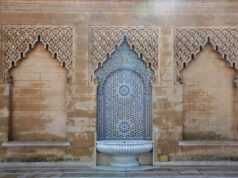
The arrival of Islam in the region marked a new chapter in Moroccan art history, with a focus on geometric patterns, calligraphy, and Arabesque designs. These elements can be seen throughout Morocco’s mosques, palaces, and riads – each one a masterpiece in its own right. The intricate tilework adorning walls and floors is a testament to the skillful craftsmanship of Moroccan artisans, who have perfected the art of zellij over centuries.
The Koutoubia Mosque in Marrakech is a shining example of this artistic style, featuring towering minarets and intricate tilework that showcase the harmonious marriage between Islamic art principles and local Berber influences. The mosque’s majestic architecture and beautiful courtyard are a tranquil oasis in the heart of the city.
Calligraphy, considered one of the highest forms of Islamic art, has played an essential role in Moroccan culture. Beautiful Quranic verses adorning mosque walls remind us of the sacred texts’ beauty and power, as well as the reverence with which they are held. The flowing scripts and ornate lettering add a touch of elegance to even the most humble buildings.
The Alaouite Dynasty: Royal Patronage and Artistic Renaissance
The Alaouite dynasty, which has ruled Morocco since 1631, played a crucial role in the development of Moroccan art history. As powerful patrons, they supported artists and craftsmen, allowing them to create works of unparalleled beauty and sophistication. The Bahia Palace, for instance, is an architectural marvel showcasing a fusion of Islamic, Berber, and European influences.
The palace’s intricate zellij, beautiful courtyards, and ornate woodwork stand as testament to the artistic renaissance that flourished during the Alaouite reign. The Fez Museum of Crafts offers a glimpse into this rich tradition, displaying stunning examples of Moroccan craftsmanship that continue to captivate visitors today.
The Chaabi Movement: Modern Art and Social Commentary
In the modern era, Moroccan artists have continued to push boundaries and explore new artistic frontiers. The Chaabi movement, which emerged in the 1980s, sought to capture the spirit of contemporary urban life while commenting on social issues affecting Moroccans.
Chaabi music, with its lively rhythms and heartfelt lyrics, has become a powerful cultural force in Morocco. Artists like H-Kaynaa and Saad Lamjarred have used their music to address topics such as love, loss, and the struggles of everyday life, resonating deeply with the Maghrebi diaspora.
Visual artists have also played a significant role in the Chaabi movement. Painters like Hassan Massoudy and Omar Ba continue to explore the themes of identity, tradition, and modernity, offering fresh perspectives on Moroccan culture that challenge and inspire.
Embracing Our Heritage: A Call to Action
As members of the Maghrebi diaspora, we invite you to join us in celebrating the rich and diverse history of Moroccan art and culture. Whether through travel, exploration, or support for contemporary artists, there are countless ways for us to deepen our connections to our shared heritage.
Let’s continue to nurture the flame of passion for all things Moroccan, ensuring that the beauty and wisdom of our ancestors remain alive for generations to come. Together, we can foster a sense of pride in our shared heritage and inspire future generations to embrace their roots with equal fervor. So, join us on this journey as we uncover the hidden treasures of Moroccan art history and culture – and let’s celebrate the magic that lies within.
You might also enjoy
Related Articles
- Exploring Amazigh Culture in Morocco: A Comprehensive Guide for Maghrebi Diaspora
- Unveiling the Blossoming of Moroccan Lantern Markets: A Cultural Phenomenon Among the Maghrebi Diaspora
- Navigating Travel Safety within the MENA Region: An Advisory Guide for Maghrebi Diaspora Readers
- Celebrating Eid Al-Fitr with Traditional Moroccan Eid Cookies: A Culinary Journey for Maghrebi Diaspora
- Reviving Al-Andalus Cultural Heritage in North Africa: A Call to Action for the Maghrebi Diaspora