Unveiling the Rich Cultural Tapestry: Phoenicians, Egyptians, and Ancient Civilizations in North Africa
Welcome to this journey of discovery, where we’ll delve into the fascinating history that binds us to our ancestors. As members of the Maghrebi diaspora, it’s essential to explore the rich cultural heritage that has shaped our identity.
Phoenician Presence: Masters of Trade and Navigation
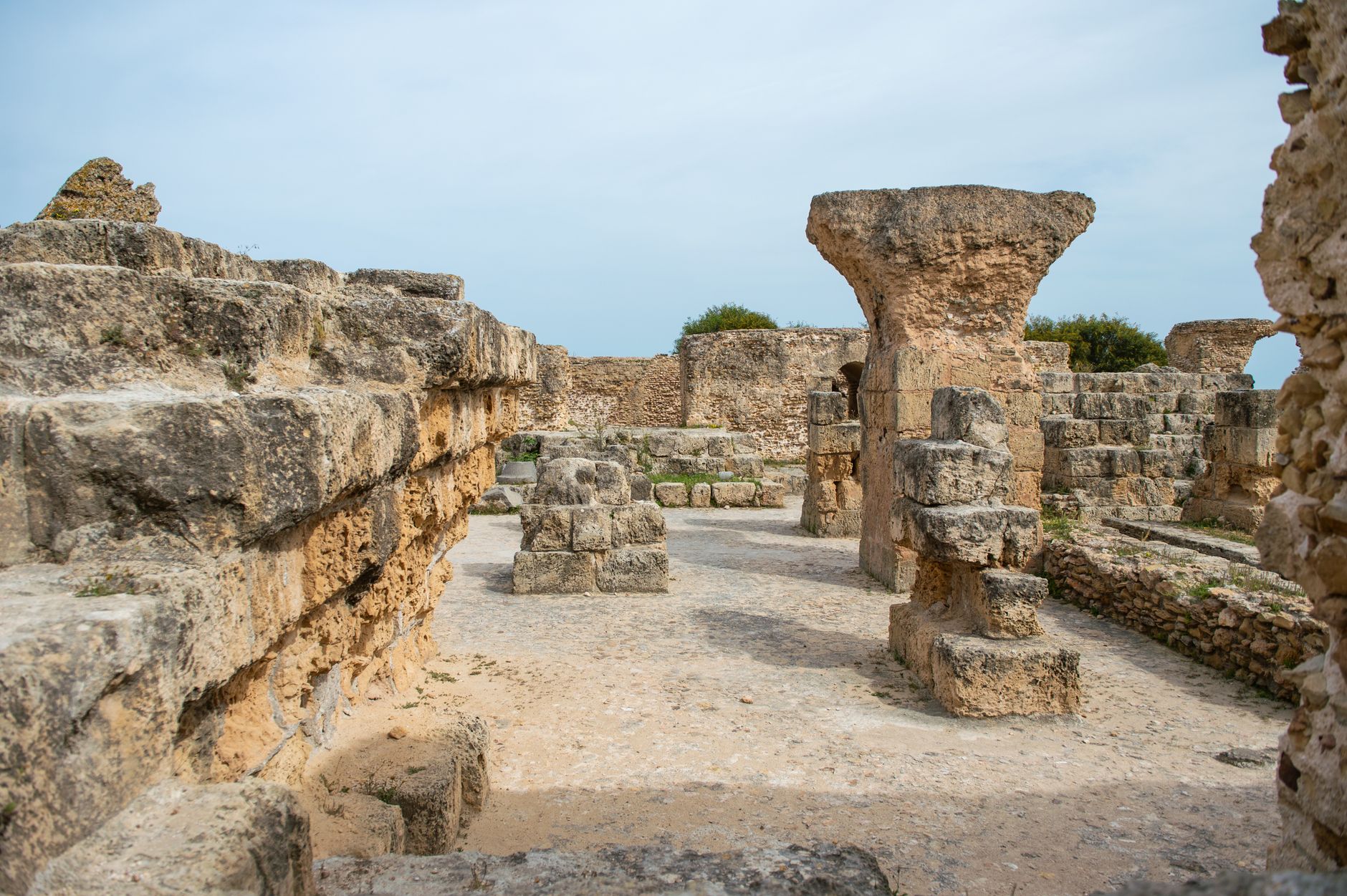
The Phoenicians, a maritime civilization originating from modern-day Lebanon, were one of the most influential cultures in ancient North Africa. For centuries, they dominated trade routes along the Mediterranean coast, establishing colonies that would eventually give rise to powerful cities like Carthage.
Founded around 814 BC, Carthage became a major trading hub and rival to Rome itself. The Phoenicians’ expertise in metalworking, glassmaking, and textiles had a lasting impact on North African culture. Their unique alphabet, the Punics script, laid the foundation for Latin, Arabic, and many other languages still used today.
The legacy of the Phoenicians can be seen in their architectural achievements, such as the Temple of Eshmoun at Leptis Magna in Libya, which showcases their skill in stone carving. Their cultural influence extends to the art of navigation, with the Phoenicians being pioneers in the development of the astrolabe.
Egyptian Legacy: Ancient Wonders and Religious Influence
Ancient Egyptians left an indelible mark on North African culture, shaping its architecture, religion, and daily life. From the majestic temples of Luxor to the intricate hieroglyphics that adorn the walls of Egyptian tombs, their artistic and cultural achievements continue to inspire awe.
The spread of Egyptian religion played a significant role in shaping North African belief systems. The worship of Tanit at Carthage became so widespread that it was later associated with the Roman goddess Diana. This syncretism highlights the dynamic exchange of ideas between cultures, resulting in unique blends of traditions and practices.
The Egyptians also introduced various agricultural techniques and crops to North Africa, including grapes, olives, and wheat. These changes transformed the region’s landscape and economy, paving the way for future civilizations to thrive.
Berbers: The Indigenous People of North Africa
The Berber people have been inhabiting North Africa for millennia, playing a crucial role in shaping its culture today. With their unique languages, customs, and art, they have contributed significantly to North African identity.
In ancient times, the Berbers were organized into various powerful kingdoms, such as Numidia, which played an essential role in both Carthaginian and Roman history. Despite facing numerous challenges throughout history, including Roman conquest, Arab invasion, and colonial rule, the Berber culture has managed to endure and persist.
Roman Empire: Conquerors and Builders
The Romans invaded North Africa in the 3rd century BC and went on to establish several provinces, including Numidia, Mauretania, and Africa Proconsularis. These territories became integral to the Roman Empire’s economy and military might.
Roman influence is evident throughout North Africa, with countless architectural wonders like the amphitheaters of El Jem in Tunisia and Dougga in Tunisia, as well as the Roman mosaics of Sabratha in Libya still standing today. The Romans also brought Christianity to North Africa, which would later play a crucial role in shaping the region’s religious landscape throughout the medieval period and beyond.
Vandals, Byzantines, and Moors: A Tumultuous Middle Ages
The fall of the Western Roman Empire in the 5th century AD marked a tumultuous period for North Africa. During this time, various tribes such as the Vandals, Byzantines, and Moors vied for control over the region.
The Vandals, who established their kingdom in North Africa between 429 and 534 AD, introduced Arian Christianity to the region, which clashed with the Catholic faith brought by the Romans. Meanwhile, the Byzantine Empire sought to regain control of North Africa during the Byzantine–Vandal War (533-534 AD).
In the 7th century, Arab forces known as Moors invaded North Africa and eventually established the Umayyad Caliphate. This marked a turning point in the region’s history, leading to the spread of Islam and the emergence of new cultural and political dynamics.
A Call to Action: Embracing Our Rich Cultural Heritage
As members of the Maghrebi diaspora, it is essential that we continue to celebrate and learn from our rich cultural history. Let us take pride in the Phoenicians’ maritime prowess, the Egyptians’ architectural mastery, the Berbers’ resilience, the Romans’ engineering feats, and the many other contributions made by various civilizations throughout North Africa’s storied past.
By understanding our roots, we can better appreciate the depth of our heritage and use it as a foundation for building a strong and unified future. Let us honor our ancestors and continue to preserve their legacy for generations to come.
You might also enjoy
Related Articles
- Unveiling the Judeo-Amazigh Cultural Substratum in North Africa: A Deep Dive
- Unveiling the Judeo-Amazigh Cultural Substratum: A Deep Dive for Maghrebi Diaspora Readers
- Exploring North Africa: Air Travel Options with Royal Air Maroc and Air France for Maghrebi Diaspora
- Unveiling Hak Lmalh: A Deep Dive into a Moroccan Cultural Tradition
- Exploring the Rich History of Amazigh Art and Fashion: A Cultural Renaissance