

The Sahara Desert: Shaping Travel and Communication in North Africa
Welcome, Maghrebi diaspora! The Sahara Desert has been a defining feature of North Africa’s history, culture, and connectivity for centuries. This vast and unforgiving environment has played a significant role in shaping the region’s identity, and its impact extends far beyond the desert’s borders. In this article, we’ll delve into the Sahara’s profound influence on travel and communication across North Africa.
Historical Migration Routes and Caravan Trade
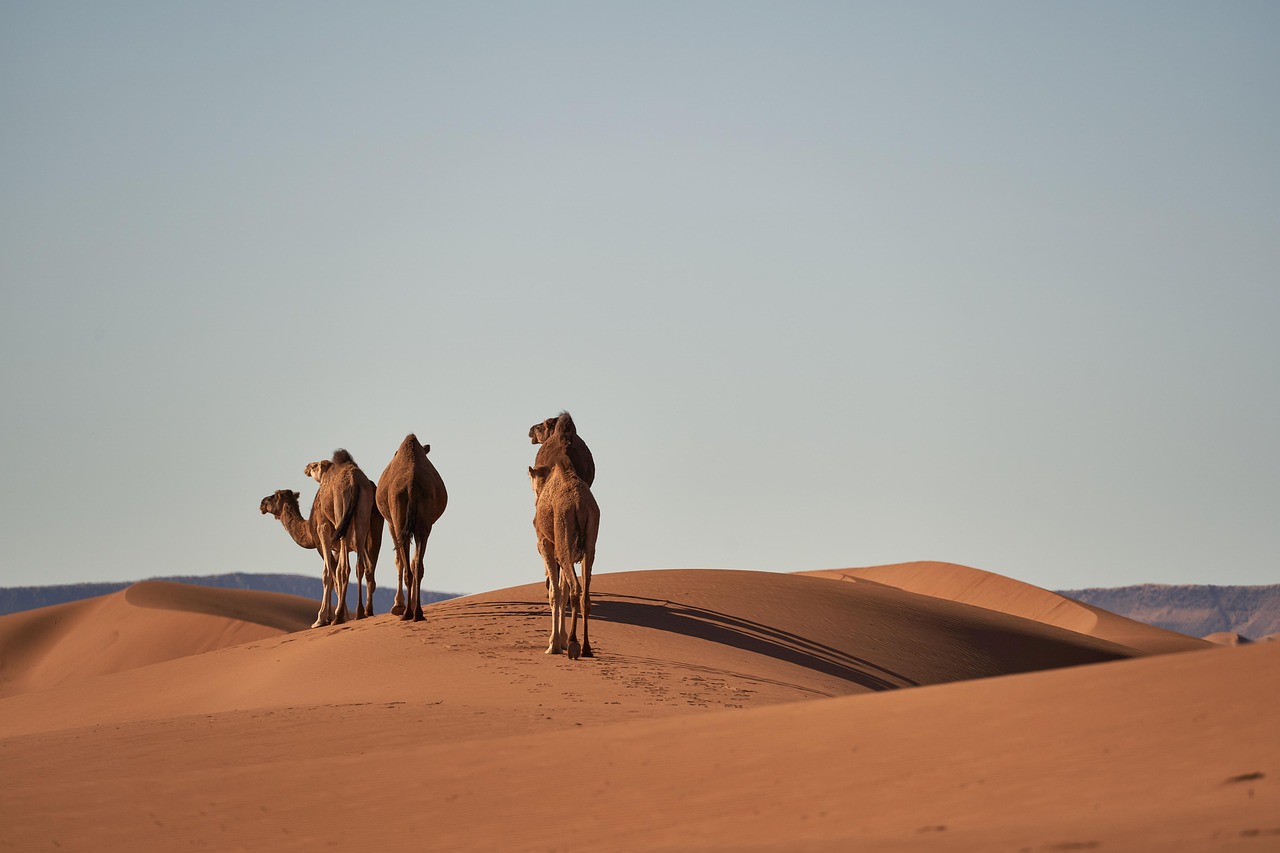
For centuries, the Sahara Desert served as a vast network of migration routes and trade paths. The Trans-Saharan trade, in particular, linked North Africa with sub-Saharan Africa, the Mediterranean, and Europe. This trade, dominated by camel caravans, transported goods such as gold, salt, ivory, and slaves. The Sahara’s harsh conditions forced caravan routes to follow specific oasis systems, creating a series of trade hubs. Cities like Timbuktu, Ghat, and Ghadames thrived as key stops on these ancient trading routes, with merchants and traders braving the treacherous journey to exchange goods and ideas.
The Sahara’s harsh climate and scarcity of water resources made the journey arduous, but the rewards were great. The trade brought wealth, cultural exchange, and the spread of ideas across the region. The Sahara’s natural barriers also created opportunities for cultural exchange, as merchants and travelers shared stories, languages, and customs along the way.
However, the decline of the trans-Saharan trade in the 17th century, due to the rise of the Atlantic slave trade and new sea routes, led to the decline of these once prosperous cities. The construction of the Trans-Sahara Highway in the 1980s has made travel easier, reducing the physical and cultural barriers imposed by the desert, but the Sahara’s legacy continues to shape North Africa’s identity.
Sahara’s Role in Isolation and Unification
The Sahara Desert also played a significant role in the isolation and unification of North African societies. The arid landscape created natural barriers, separating nomadic tribes and sedentary communities, each with their unique cultures, languages, and traditions. The Sahara’s vast expanse and harsh conditions made it difficult for communities to interact and share ideas, leading to the development of distinct cultures and languages.
However, the Sahara also facilitated cultural exchange. Caravans, as well as the spread of Islam, helped spread ideas, languages, and technologies across the region. The Sahara’s isolation also led to the development of unique art forms, music, and literature, as communities found ways to express themselves and connect with others.
In the modern era, the Sahara’s natural barriers have been bridged by technology, with the construction of roads, railways, and telecommunications networks. However, the Sahara’s legacy continues to shape North Africa’s identity, with the region’s diverse cultures and languages reflecting the desert’s influence.
Impact on Communication
The Sahara’s harsh climate and vast expanse made long-distance communication difficult. The desert’s lack of reliable water sources, extreme temperatures, and sandstorms made travel by foot or camel arduous. The Sahara’s natural barriers also created challenges for communication, as messages were often carried by word of mouth or through smoke signals.
To overcome these challenges, Saharan societies developed innovative methods of communication, such as drum messages, and, later, the use of telegraph lines and radio transmitters. The construction of the Trans-Sahara Highway has further improved communication across the Sahara, bridging the gap between isolated communities and urban centers.
Today, satellite technology has further improved communication across the Sahara, allowing for real-time communication and connectivity. However, the Sahara’s legacy continues to shape North Africa’s communication networks, with the region’s diverse cultures and languages reflecting the desert’s influence.
Modern Challenges and Opportunities
While the Sahara has faced numerous challenges, it also presents opportunities for development. Renewable energy sources like solar power, harnessed in the desert’s sunny conditions, could provide power to remote communities and stimulate economic growth. The Sahara’s natural resources, such as gold, salt, and minerals, could also be exploited to support local economies.
However, climate change poses a significant threat to the Sahara and the communities that depend on it. Rising temperatures and shifting precipitation patterns could exacerbate desertification, impacting travel, agriculture, and water resources. The Maghrebi diaspora can play a vital role in supporting sustainable development projects in the region and advocating for climate action.
Conclusion: Embracing the Sahara’s Legacy
The Sahara Desert has shaped North Africa’s history, culture, and connectivity. As we navigate the challenges and opportunities presented by this immense desert, it is essential to remember its rich legacy and the resilience of the communities that have thrived within it.
We invite you, Maghrebi diaspora, to join us in celebrating this heritage and supporting initiatives that foster sustainable development in the Sahara and North Africa as a whole. By embracing the Sahara’s legacy, we can work towards a brighter future for the region’s diverse cultures and languages.
You might also enjoy
Related Articles
- Exploring Algeria’s Rich Culture, Traditions, and Cuisine: A Culinary Journey Through the Heart of North Africa
- Maximizing Miles: A Comprehensive Guide to Affordable Flights to the Middle East & North Africa for the Maghrebi Diaspora
- Strategic Connection: Exploring the Mediterranean, North Africa, and the Sahel as a Unified System
- Discovering the Vibrant Culture, Traditions, and Cuisine of Algeria
- Rediscovering Roots: Young French Jews Embrace the Maghreb Culture