


Unveiling the Judeo-Amazigh Cultural Substratum: An In-depth Analysis
Welcome to our journey into the rich and intricate Judeo-Amazigh cultural substratum, which lies at the very heart of the Maghrebi identity. This article aims to shed light on the complex interplay of Jewish and Berber (Amazigh) influences that have shaped the region’s culture, history, and identity. As we delve into the fascinating history of Jewish settlement in the Maghreb, we’ll discover how Jewish scholars and philosophers made significant contributions to the fields of science, mathematics, medicine, and philosophy during the Almohad Caliphate (1130-1269).
The Historical Context: Jewish Settlement in the Maghreb
The history of Jewish presence in the Maghreb dates back over two millennia, with Jews first arriving in North Africa during the Roman conquest. Their numbers grew significantly following the Islamic conquests in the 8th century. By the 11th century, Jewish communities were thriving in cities such as Fez, Marrakesh, and Tunis, with Jewish scholars and philosophers making significant contributions to various fields.
The Golden Age of Jewish culture in the Maghreb took place during the Almohad Caliphate, when Jewish scholars and philosophers, such as Maimonides and Judah Halevi, made groundbreaking discoveries in science, mathematics, medicine, and philosophy. However, the decline of Jewish influence in the Maghreb began in the late Middle Ages, with the rise of Christian powers in Europe and the growth of intolerance among some Muslim rulers.
The Amazigh Factor: Berber Influence on Jewish Culture
The Berber (Amazigh) people, who make up a significant portion of the population in the Maghreb, have also played a crucial role in shaping Jewish culture in the region. The Amazigh language, with its unique alphabet and rich oral traditions, has influenced Jewish liturgy and language, particularly in the Mizrahi tradition. For example, many Hebrew words for numbers are of Amazigh origin, reflecting the cultural exchange and syncretism that has characterized the region.
Furthermore, the Berber influence can be seen in Jewish music, dance, and folklore. The Hazzan, or Jewish cantor, often incorporates Amazigh melodies and rhythms into his performances, creating a unique blend of cultures. This cultural fusion is reflected in the traditional Judeo-Amazigh dishes, such as couscous, which has its roots in Berber cuisine but has been adapted by Jewish cooks to include ingredients such as chicken, fish, and vegetables.
The Judeo-Amazigh Dialects: A Unique Blend of Languages
The Judeo-Amazigh dialects, spoken by Jewish communities in the Maghreb, represent a unique blend of Hebrew, Arabic, and Amazigh languages. These dialects, also known as Judeo-Berber or Shawiya, have developed over centuries of interaction between Jewish and Berber communities. They are distinct from both Modern Standard Arabic and Amazigh (Berber) dialects, with a unique grammar, vocabulary, and pronunciation.
One of the most notable features of the Judeo-Amazigh dialects is the use of Hebrew and Amazigh vocabulary within an Arabic grammatical structure. This blending of languages reflects the cultural syncretism that has characterized the region, as well as the complex historical interactions between Jewish, Berber, and Arab communities.
The Judeo-Amazigh Cuisine: A Culinary Fusion
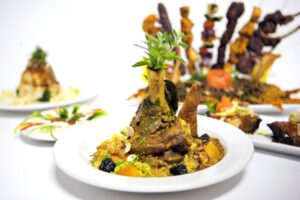
The Judeo-Amazigh cuisine is a reflection of the cultural syncretism that characterizes the region. It combines traditional Jewish dishes with local Amazigh ingredients and cooking techniques, creating a unique culinary tradition that is distinct from both Jewish and Berber cuisines.
For example, the famous Moroccan dish, couscous, has its roots in Berber cuisine, but has been adapted by Jewish cooks to include ingredients such as chicken, fish, and vegetables. Another example is the use of spices such as cumin, coriander, and paprika, which are common in Amazigh cuisine, in Jewish dishes like harissa and schnitzel.
The Future of Judeo-Amazigh Culture
Despite the challenges faced by Jewish communities in the Maghreb, the Judeo-Amazigh cultural substratum continues to thrive. Preservation efforts, such as the revival of Judeo-Berber languages and the documentation of traditional Jewish customs and folklore, are essential to ensuring the continued survival and flourishing of this unique cultural heritage.
We invite you to join us in celebrating and preserving the rich Judeo-Amazigh cultural substratum that lies at the heart of the Maghrebi identity. Whether through learning a Judeo-Berber language, attending a Jewish cultural event, or simply trying a traditional Judeo-Amazigh dish, there are countless ways to engage with this fascinating cultural heritage.
Call to Action
We encourage our readers to explore the Judeo-Amazigh cultural substratum for themselves. Whether through learning a Judeo-Berber language, attending a Jewish cultural event, or simply trying a traditional Judeo-Amazigh dish, there are countless ways to engage with this fascinating cultural heritage. By doing so, we can work together to preserve and celebrate the rich cultural traditions that lie at the heart of the Maghrebi identity.
You might also enjoy
Related Articles
- Unveiling the Future of Amazigh Culture in Morocco: Challenges and Opportunities
- Celebrating Yennayer 2026: Traditional Amazigh Delicacies for the Berber New Year
- Unveiling the Global Impact of Islamic Culture on Fashion: A Maghrebi Perspective
- Revisiting North African Flavors: A One-Pot Chickpea Soup Recipe for a Homely Meal
- Embracing Modernity: Learning from Contemporary Muslim Women’s Fashion in Maghreb