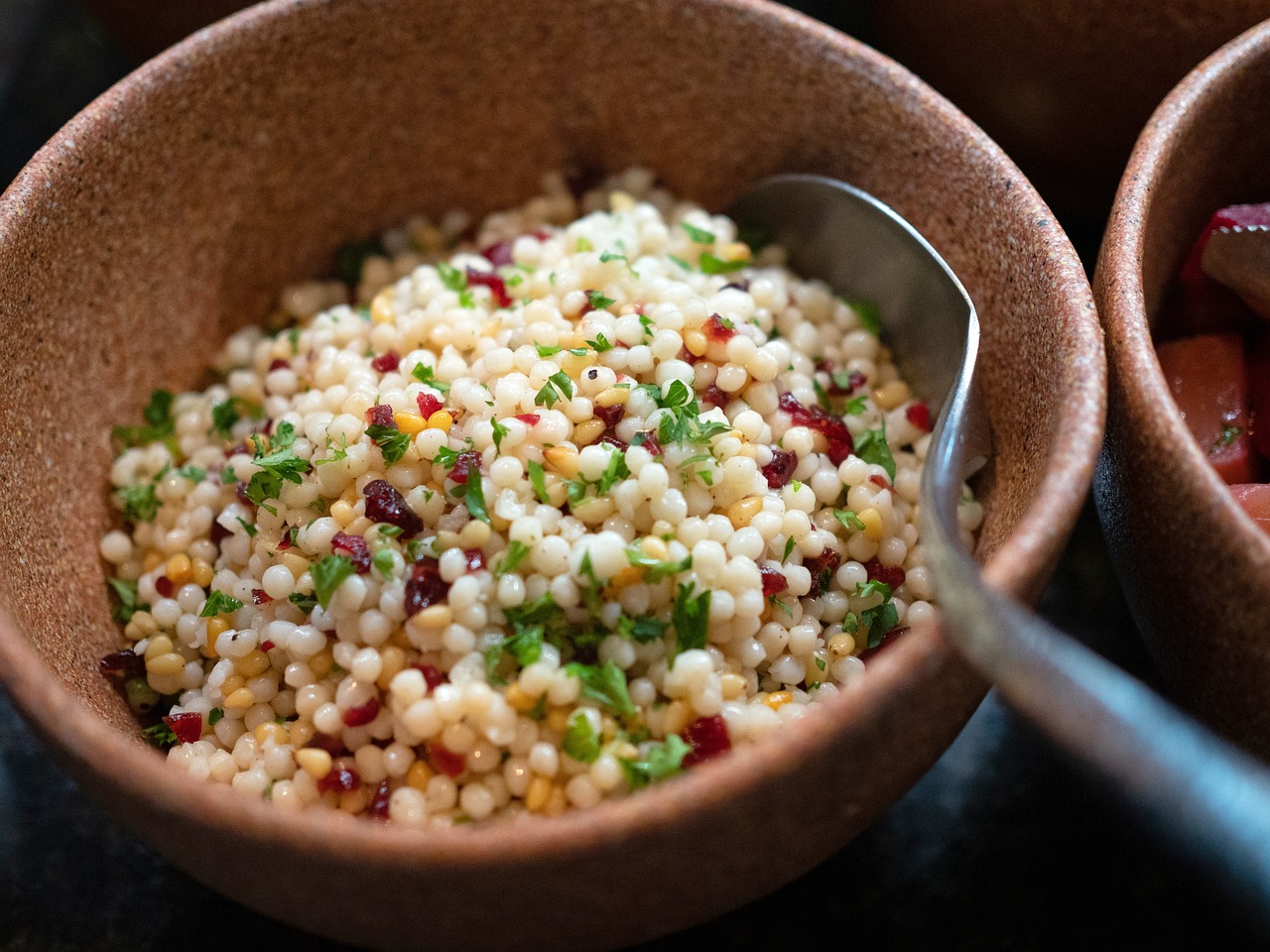
As the moon signals the breaking of fast each night during Ramadan, households in Algeria, Tunisia, and Morocco gather around tables laden with traditional dishes. Among them, couscous remains the centrepiece, a symbol of unity and celebration that transcends generations and borders. This recipe is an authentic representation of this much-loved dish, passed down through generations to share with our fellow diaspora.
History and Origins
A staple of North African cuisine for over a thousand years, couscous has its roots in the Berber people of the Maghreb. Each region has its unique spin on this beloved dish – Moroccan couscous is renowned for its seven vegetables and lamb, while Algerian versions add merguez sausages and Tunisian variants often feature fish. During Ramadan, families gather around a communal couscous pot to share stories, laughter, and the spirituality of Iftar. The aroma of sizzling onions and spices wafts through the air, filling the senses with warmth and hospitality.
Ingredients (serves 6)
- 500 g medium-grain couscous
- 1 kg bone-in lamb shoulder – cut into large chunks by your butcher, with a tender touch that hints at the slow-cooked flavors to come
- 4 medium carrots – peeled and halved, their sweet crunch providing a satisfying contrast to the rich broth
- 4 medium courgettes – halved lengthways, their delicate flesh soaking up the flavorful juices like a sponge
- 3 medium turnips – peeled and quartered, adding a delightful pungency to the dish
- 2 large tomatoes – quartered, bursting with juicy freshness and vibrant color
- 1 large onion – finely chopped, its sweet, caramelized flavors mingling with those of the spices
- 4 tbsp olive oil
- 2 tsp ras el hanout – a blend of aromatic spices that adds depth and warmth to the dish
- 1 tsp ground coriander – with its subtle, citrusy note, adding complexity to the broth
- 1 tsp ground cumin – earthy and savory, complementing the lamb’s rich flavor
- ½ tsp ground cinnamon – a hint of sweetness, balancing out the bold spices
- Salt and black pepper to taste – a touch of salt brings out the natural flavors, while black pepper adds a subtle kick
- Fresh coriander – a large handful, chopped – adding a bright, citrusy note to the dish, reminiscent of sunny Mediterranean days
- 250 g merguez sausages (optional)
- 120 g capers (for Tunisian version)
Step-by-Step Instructions
Prep time: 30 minutes | Cook time: 1 hour 45 minutes | Difficulty: Medium – a challenge worth taking on, as the reward is well worth the effort!
- Brown the lamb: heat olive oil in the bottom of your couscoussier or a large heavy pot over medium-high heat. Add the lamb pieces and brown on all sides, about 10 minutes total, until they’re nicely caramelized and fragrant. For Tunisian variation, add capers to the pan during this step – their salty, pickled flavor adds a delightful contrast to the rich lamb.
- Prepare vegetables: while the lamb browns, peel and chop the carrots, courgettes, turnips, and tomatoes as specified in the ingredients list. Take your time, and make sure each piece is cut to perfection – after all, presentation matters!
- Build the broth: after browning the lamb, remove from heat and set aside. In the same pot, fry the onion until soft and golden, about 5 minutes, its sweet aroma wafting through the air. Add ras el hanout, cumin, coriander, and cinnamon, stirring for 30 seconds until fragrant – the spices meld together like a harmonious symphony.
- Add merguez sausages (optional): if using merguez sausages, add them at this point and simmer for 20 minutes to cook through – their spicy kick adds a delightful contrast to the lamb’s rich flavor.
- Simmer the broth: bring the mixture to a boil, then reduce to a gentle simmer. Add the prepared vegetables in stages as follows: carrots and turnips after 30 minutes of simmering, tomatoes and courgettes after another 20 minutes – allowing each vegetable its moment to shine.
- Prepare the couscous: place couscous in a large bowl, drizzle with 2 tbsp olive oil, and rub between your palms to coat each grain. Add 300 ml of warm salted water, stir, and leave to absorb for 5 minutes – the grains should be slightly tender but still retain some crunch. Rake with a fork to separate grains – a gentle touch is essential here.
- Steam the couscous: place couscous in the top of the couscoussier and steam over the broth for 20 minutes. Remove, break up any clumps with a fork, add a knob of butter, and return to steam a further 10 minutes until perfectly fluffy – the result is worth the effort!
Tips for Success
The difference between good couscous and great couscous usually comes down to a few small details that experienced cooks know by instinct. Heed these tips, and your dish will be elevated to new heights:
- Never stir couscous while it steams – lift and fluff gently with a fork only after removing from heat
- If grains are clumping, add a tiny drizzle of olive oil and work it in with your fingertips
- The broth should be fragrant and slightly reduced – if it tastes thin, simmer uncovered 10 minutes before serving
- For Ramadan: make a double batch of broth – it reheats beautifully and improves overnight
- Leftovers keep 3 days in the fridge; store couscous and broth separately
Regional Variations
For an Algerian twist, add merguez sausages to the broth for a spicier profile. In Tunisia, couscous is frequently made with fish instead of lamb – the delicate flavors of the fish complementing the bold spices.
Serving and Presentation
Serve the couscous mounded in a large communal dish with the vegetables arranged on top and the lamb pieces nestled in the centre. For a truly authentic Ramadan feast, serve with harissa, dates, and fresh fruits – the perfect combination of flavors and textures to delight your senses.
Conclusion
Couscous is the dish that binds families together during the sacred month of Ramadan. Prepare this authentic recipe to honour your cultural heritage and create lasting memories with loved ones. Share your photos and experiences in the comments below – we can’t wait to see how you bring this recipe to life!
You might also enjoy
Related Articles
- Celebrating Couscous, Uniting the Maghreb: Traditional Recipes for Festive Occasions
- Authentic Algerian Eid al-Fitr Cookie Recipe: A Sweet Celebration for the Maghrebi Diaspora
- Cooking up Tradition: A Guide to Making Algerian Bricks during Ramadan
- Bringing Morocco into Your Home: A Guide to Decorating with Authentic Moroccan Lanterns
- Uniting Across Borders: Ramadan’s Maghrebi Couscous Celebration