Unveiling Phoenician and Egyptian Influences on North African Architecture: A Cultural Journey
Welcome to our cultural odyssey, where we’ll embark on a fascinating exploration of the profound historical connections between North Africa and its ancient neighbors – the Phoenicians and Egyptians. As we delve into the region’s architectural heritage, you’ll discover how these civilizations left an indelible mark on the landscapes that shape our collective identity.
Phoenician Influence: The Urban Ports
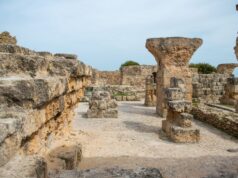
The Phoenicians were masterful seafarers and traders who established a network of coastal cities across North Africa. Their impact on urban architecture is evident in the grandeur of ancient Carthage, modern Tunisia – a city that proudly wears its Phoenician heritage like a badge of honor.
Carthaginian architecture was a masterclass in cultural fusion, blending indigenous Berber styles with Phoenician innovations. The use of vaulted ceilings, corbelling techniques, and monumental gates were all introduced by the Phoenicians, as seen in the famous ‘Tophet’ cemeteries – a testament to their skillful adaptation of new ideas.
Moreover, the iconic Byrsa Hill, where Carthage was founded, featured a fortified citadel that bore striking resemblance to Phoenician urban design. This architectural influence is a powerful reminder of the cultural exchange fostered by the Phoenicians’ extensive trade networks – a phenomenon that would have far-reaching consequences for the development of North African architecture.
Egyptian Influence: Temples and Tombs
From the depths of the Nile, Egyptian architecture migrated westwards, reaching Cyrenaica – present-day Libya. The ancient city of Cyrene is a prime example of this architectural fusion, with its temples and tombs bearing the hallmarks of both cultures.
The Temple of Zeus Olympios in Cyrene was built using local limestone and incorporates typical Egyptian temple design elements such as the hypostyle hall, obelisks, and columns adorned with capitals reminiscent of lotus flowers – a motif that would become synonymous with North African architecture.
Additionally, the necropolis of Cyrene reflects the Egyptian penchant for intricate tomb designs. These tombs, often decorated with elaborate carvings and inscriptions, continue to captivate scholars and tourists alike, offering a window into the lives of those who came before us.
Influence on Roman Architecture
The fusion of Phoenician and Egyptian architectural elements continued under Roman rule. The Punic-Roman Amphitheatre in El Jem, Tunisia, is a prime example – a structure that would have been the envy of any ancient city.
This colossal structure was designed to accommodate thousands of spectators for gladiatorial contests and public events. Its elliptical shape, tiers of seating, and impressive arches are all hallmarks of Roman architecture, yet bear distinct echoes of earlier Phoenician and Egyptian designs – a testament to the power of cultural exchange.
Modern Architectural Remnants
The influences of Phoenician and Egyptian architecture persist in modern North African cities. In Morocco, the Badia Palace in Marrakech boasts a unique fusion of traditional Moroccan and Mediterranean architectural styles, echoing the region’s rich history – a living embodiment of cultural heritage.
In Libya, the ancient city of Leptis Magna is undergoing restoration efforts to preserve its Roman-Egyptian architectural heritage for future generations. These endeavors serve as a testament to the enduring cultural significance of these ancient architectural influences – a reminder that our collective past informs our present and future.
A Call to Action
As we delve deeper into understanding our cultural roots, let us cherish and preserve these architectural marvels that tell the story of North Africa’s rich history. Whether through travel, academic study, or local initiatives, it is essential that we continue to explore and celebrate our shared heritage – a journey that will enrich our lives and foster greater appreciation for our collective past.
Join us in our journey as we uncover more about the Phoenician and Egyptian influences on North African architecture. Stay tuned for more insightful articles that will take you on a fascinating odyssey through time and space!
You might also enjoy
Related Articles
- Celebrating Mother’s Day in the North African Diaspora: A Cultural Exploration
- Reviving Phoenician Artifacts: An Archaeological Exploration in North Africa
- Unveiling the Judeo-Amazigh Cultural Substratum in North Africa
- Navigating Identity: The North African Diaspora in France – A Comprehensive Analysis
- Morocco Fashion Week 2026: A Celebration of North African Design and Innovation