Exploring Moroccan Jewish Culture: An Ethnographic Analysis
In this captivating journey, we delve into the rich and vibrant world of Moroccan Jewish culture. As members of the Maghrebi diaspora, it’s essential to understand and appreciate our roots. For centuries, Moroccan Jews have woven a unique tapestry of traditions, languages, and spiritual practices that define their remarkable cultural heritage.
The Historical Context: A Brief Overview
Moroccan Jewish culture dates back thousands of years, with the first known Jewish communities appearing in North Africa as early as the 5th century BC. The history of these communities is deeply intertwined with that of Morocco itself, reflecting a blend of Berber, Arab, and Jewish influences. From the ancient Roman Empire to the Islamic Golden Age, Moroccan Jews have played pivotal roles in various aspects of society, from trade and commerce to art and literature.
Throughout the centuries, Moroccan Jews contributed significantly to the country’s cultural landscape. Their influence was particularly notable during the reigns of prominent dynasties like the Almoravids, Almohads, and Alawites. As a result, Moroccan Jewish culture has developed a distinct flavor, shaped by its historical context and geographic location.
However, it wasn’t until the 20th century that Moroccan Jewish culture truly flourished. The country’s relatively liberal policies towards its Jewish population attracted immigrants from neighboring countries, further enriching the cultural landscape. This influx of new ideas and traditions helped to create a unique blend of Moroccan Jewish identity.
Languages: Aramaic, Hebrew, and Judeo-Arabic
Moroccan Jews have historically spoken a variety of languages, with Aramaic being the most ancient. Over time, however, Arabic became the predominant language due to its widespread use in North Africa and the Islamic world. This has led to the development of distinct dialects, such as Judeo-Arabic, which is spoken by Moroccan Jews.
Judeo-Arabic, also known as Haketia, features unique linguistic traits that set it apart from other Arabic dialects. Many words in this dialect share roots with their Hebrew counterparts, serving as a bridge between the two languages. This blend of influences has resulted in a rich and complex linguistic heritage.
Hebrew also plays an essential role in Moroccan Jewish culture, particularly in religious contexts. Despite the widespread use of Arabic, Hebrew remains a fundamental part of the community’s identity and spiritual practices. Many Moroccan Jews continue to learn and speak Hebrew as a way of connecting with their cultural heritage.
Food: A Culinary Symphony
Moroccan Jewish cuisine is a mouthwatering blend of flavors influenced by both Jewish and Arabic traditions. This fusion of culinary styles has resulted in the creation of unique dishes that are distinctly Moroccan. Some signature dishes include Chicken Pastilla, Harissa, and B’stilla, which features layers of crispy pastry, chicken, almonds, and spices.
Fish plays an important role in Moroccan Jewish cuisine due to the community’s coastal location. Dishes like Hammour Mechoui (grilled conger eel) and Sardines Asszida (stewed sardines with spices) are among the favorites. Many traditional Moroccan Jewish dishes are prepared according to kashrut, the Jewish dietary laws, which emphasizes the importance of Kosher meat, dairy products, and the avoidance of mixing meat and milk.
Art and Architecture: A Visual Testimony
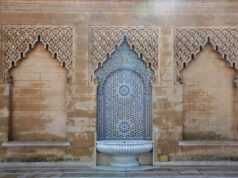
Moroccan Jewish art is characterized by intricate patterns, vivid colors, and spiritual symbolism. This can be seen in various forms such as ceramics, textiles, and metalwork. The community’s artistic legacy is evident in the stunning tile work and intricate designs that adorn the walls of synagogues, riads, and other buildings.
One of the most iconic examples of Moroccan Jewish architecture is the El Badi Palace in Marrakech, which once housed a synagogue known as the Espérance Synagogue. Although the synagogue no longer exists, the palace’s impressive tile work and intricate designs serve as a testament to the community’s artistic legacy.
Another notable example is the Jewish Quarter (Mellah) in Fes, which showcases traditional Moroccan Jewish architecture with its narrow streets, riads, and zellij (decorative tile work). This historic neighborhood is a treasure trove of cultural heritage, offering a glimpse into the community’s rich history and traditions.
Spiritual Practices: Preserving a Rich Heritage
Moroccan Jewish spiritual practices are deeply rooted in Kabbalah, the mystical branch of Judaism. This is evident in the community’s use of amulets (kameas), talismans, and charms to ward off evil spirits and bring good fortune. The annual Pilgrimage Festival (Pilgrimage to the Tomb of Rabbi Hiyya) is another significant aspect of Moroccan Jewish spiritual life.
This event attracts thousands of Jews from around the world, demonstrating the enduring appeal of this ancient tradition. The festival is a celebration of the community’s heritage and cultural identity, highlighting the importance of preserving this rich legacy for future generations.
Conclusion: Embracing Our Roots
As members of the Maghrebi diaspora, it’s essential to appreciate the unique cultural tapestry that defines our region. By exploring the vibrant history, languages, cuisine, art, and spiritual practices of Moroccan Jewish culture, we not only deepen our understanding but also strengthen our connection to our roots.
Let us continue to celebrate and preserve this remarkable cultural legacy, fostering a sense of pride in our shared heritage. By doing so, we contribute to the rich mosaic that is North African culture and ensure its enduring significance for generations to come.
You might also enjoy
Related Articles
- A Deep Dive into Moroccan Jewish Culture through an Ethnographic Lens
- Exploring North African Youth Culture through Moroccan Photography: A Visual Journey for the Maghrebi Diaspora
- Exploring the ‘St Tropez of North Africa’: Essaouira, Morocco – A Budget Travel Guide
- Exploring the ‘Beurcore’ Movement: Navigating Fashion, Culture, and Identity
- Reviving Amazigh Culture in Morocco: A Guide for Diaspora