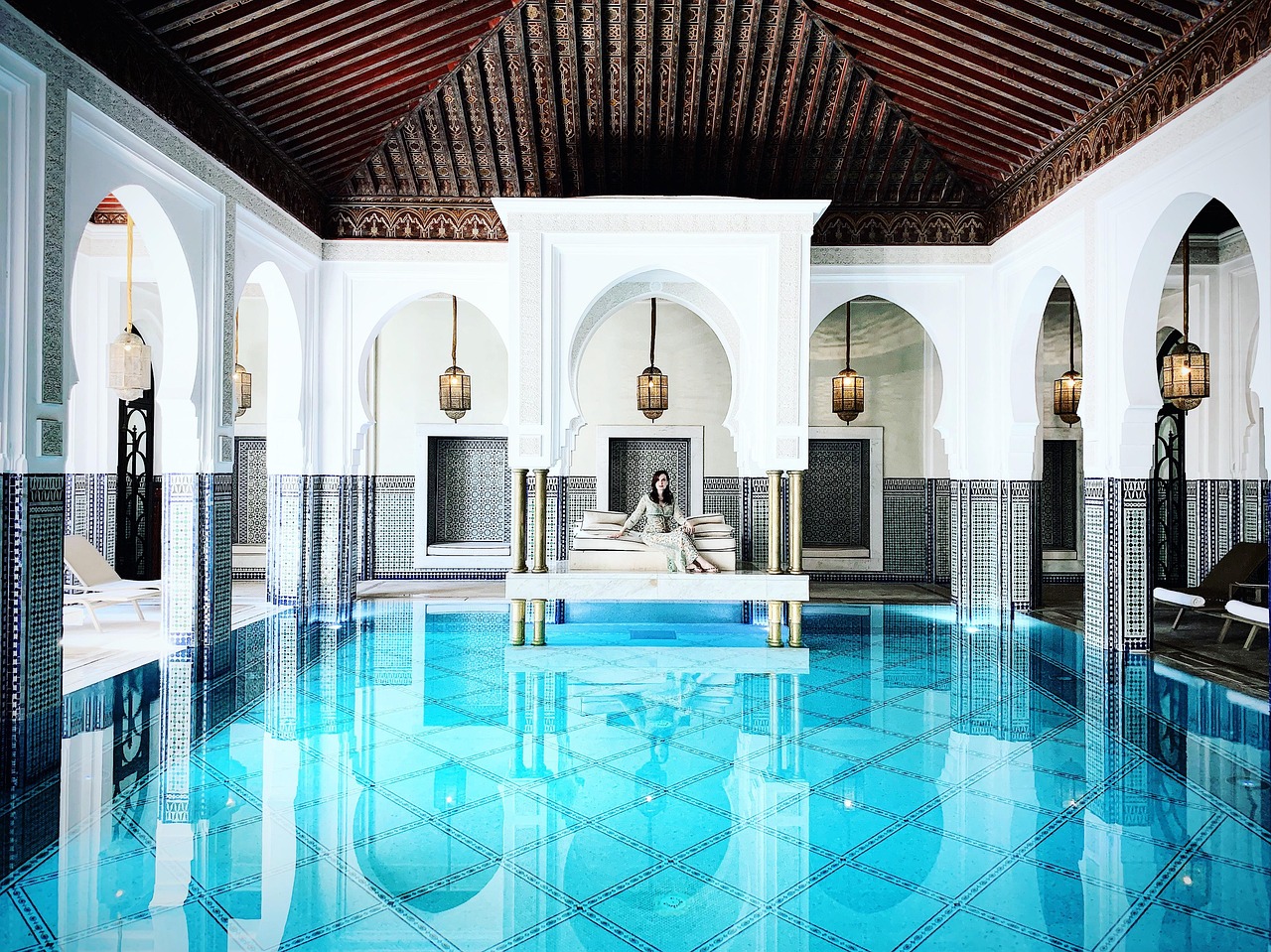
Welcome to the Enchanting World of Traditional Moroccan Hammam Villa Design
As we embark on this fascinating journey, you’ll be transported to the heart of Morocco, where ancient traditions and modern luxuries blend seamlessly together. We’re thrilled to delve deep into the captivating world of traditional Moroccan villa design, focusing particularly on the Hammam-style architecture that has been central to social life in the kingdom for centuries.
The Timeless Allure of Hammam Architecture
Hammams are more than just bathhouses – they’re sacred spaces where friends and family gather to socialize, rejuvenate, and connect with one another. The architecture that surrounds these hallowed spaces is a testament to Morocco’s rich cultural heritage, blending Berber, Roman, and Islamic influences in a unique design that’s both beautiful and functional.
Every detail within a Hammam tells a story of Morocco’s cultural history – from the intricate mosaics that adorn walls and floors to the ornate plasterwork and vaulted ceilings that seem to defy gravity. The soothing sound of flowing water adds an extra layer of serenity, making these spaces truly otherworldly.
The Hammam Villa: A Blend of Tradition and Modernity
In recent years, the timeless beauty of Hammam architecture has been cleverly incorporated into modern villa designs. These dwellings seamlessly merge traditional Moroccan elements with contemporary living standards, creating a unique living experience that’s both luxurious and deeply rooted in local culture.
One of the most striking features of these Hammam villas is their harmonious blend of indoor and outdoor spaces. Courtyards, terraces, and gardens are meticulously designed to provide a serene oasis, where you can escape the hustle and bustle of daily life and connect with nature.
Modern amenities like swimming pools and fitness centers coexist peacefully with traditional elements like kasbah-style walls, fountains, and ornate ironwork. This blend of old and new creates an inviting atmosphere that’s perfect for relaxation or entertainment.
The Heart of the Home: The Hammam Spa
At the very core of every Hammam villa lies the spa – a space where guests can indulge in the healing rituals of traditional Moroccan bathing practices. These rituals typically involve a steam room, a hot and cold plunge pool, and a massage room, all carefully designed to promote relaxation and rejuvenation.
In many cases, these spaces are adorned with beautiful mosaics, intricate woodcarvings, and handcrafted furnishings that evoke the essence of Moroccan culture. The Hammam spa is not just a place for relaxation – it’s also a testament to Morocco’s rich cultural heritage and its people’s deep connection with nature.
The Artistry of Zellij: A Tapestry of Color and Culture
Zellij, the stunning mosaic work that adorns Hammam villas, is a key element in Moroccan architecture. Each piece of zellij is handcrafted from glazed ceramic tiles, featuring intricate designs that range from geometric patterns to floral motifs.
The process of creating zellij is an artform passed down through generations, with each piece telling a story of Morocco’s rich cultural heritage. From the delicate craftsmanship to the vibrant colors, zellij serves as a visual celebration of Moroccan culture and its people’s deep connection with their traditions.
A Call to Preserve and Celebrate Hammam Architecture
As we conclude our journey through traditional Moroccan Hammam villa design, it’s essential that we remember the importance of preserving these cultural treasures for future generations. By supporting local artisans, promoting awareness of Morocco’s unique architectural heritage, and celebrating its beauty, we can ensure that this enchanting world continues to captivate and inspire.
So let us come together in celebrating the beauty of traditional Moroccan Hammam villa design – whether it be through supporting local artisans, sharing our love for Moroccan culture, or simply taking a moment to appreciate the intricate craftsmanship that goes into each detail. Together, we can all play a part in preserving this rich cultural heritage and keeping its beauty alive for generations to come.
You might also enjoy
Related Articles
- A Tour of a Traditional Moroccan Villa with Hammam – A Journey Through Time and Culture
- Exploring the Influence of Moroccan Design in Interior Spaces: A Cultural Journey for Maghrebi Diaspora
- Reviving Endangered Languages in North Africa: Copts, Nubians, and Berbers
- Inspiring Interiors: How Moroccan Design Elements Elevate Modern Spaces
- Unveiling the Enduring Phoenician Influence on North African Architecture