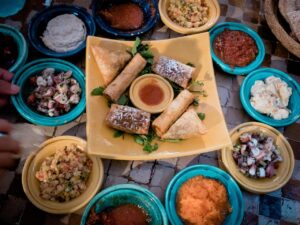
Yennayer, the Berber New Year, is a time for community, celebration, and a feast of traditional delicacies. As the Maghreb’s indigenous people, the Amazigh have a rich culinary heritage that spans thousands of years, weaving together the threads of history, culture, and tradition. To honour this cultural heritage, we’ve compiled a selection of recipes to bring the spirit of Yennayer to your table, no matter where you are in the world. Imagine the aroma of steamed semolina cakes wafting from the kitchen, mingling with the warmth of family and friends gathered around the table, sharing stories and making memories.
History and Origins
The Berber people, also known as the Amazigh, are the indigenous population of North Africa. Their language, Tamazight, is one of the oldest in the world, predating Arabic and Semitic languages. Yennayer marks the beginning of a new year according to the Amazigh calendar, based on lunar cycles. This ancient celebration is steeped in tradition, with families gathering to prepare and share special dishes, pass on stories, and connect with their roots. It’s a time to reflect on the past, look to the future, and celebrate the present with loved ones.
Aish el Khechoucha (Steamed Semolina Cake)
Ingredients (serves 8)
This steamed semolina cake is a staple of Amazigh celebrations. It is traditionally made with butter and honey, but this version uses a healthier olive oil and a touch of orange blossom water for a delicate flavour. The result is a moist and aromatic cake that’s perfect for special occasions.
- 600 g coarse semolina
- 500 ml milk
- 500 ml water
- 1 tsp baking powder
- ½ tsp salt
- 300 ml olive oil
- 200 g honey
- Zest of 2 oranges
- 2 tsp orange blossom water
- 1 tsp ground cinnamon
Step-by-Step Instructions
Prep time: 15 minutes | Cook time: 45 minutes | Difficulty: Easy
- Combine dry ingredients: in a large mixing bowl, whisk together semolina, baking powder, and salt. Take your time, and make sure the mixture is well combined.
- Prepare the wet ingredients: in a separate bowl, whisk together milk, water, olive oil, honey, orange zest, orange blossom water, and cinnamon. The aroma of the wet ingredients will start to fill the kitchen, teasing your taste buds.
- Mix wet and dry: pour the wet ingredients into the dry, stirring until well combined. Be gentle, as you don’t want to overmix the batter.
- Steam the cake: line a large steamer with parchment paper, then pour in the semolina mixture. Cover and steam over medium heat for 45 minutes. The anticipation will build as you wait for the cake to cook.
Tips
- For a sweeter cake, add up to 100g more honey to taste. The sweetness will balance out the earthy flavour of the semolina.
- If you don’t have a steamer, you can also bake this cake in a large, well-greased baking dish at 180°C for 45 minutes. The result will be a slightly different texture, but still delicious.
Msemmen (Tunisian Layered Pancake)
Ingredients (makes 6-8 pancakes)
This Tunisian layered pancake, made from a thin, buttery dough, is a popular dish during Yennayer celebrations. It is often served with harissa, olives, and pickled lemons. The layers of pancake will unfold like a treasure chest, revealing a delicate, buttery treat.
- 600 g all-purpose flour
- 1 tsp salt
- 400 ml water
- 200 ml olive oil
- 200 g clarified butter
Step-by-Step Instructions
Prep time: 20 minutes | Cook time: 30 minutes per pancake | Difficulty: Medium
- Make the dough: in a large mixing bowl, combine flour, salt, and water to form a smooth, elastic dough. Let rest for 30 minutes. Take this opportunity to gather your thoughts and reflect on the significance of Yennayer.
- Prepare the clarified butter: melt the clarified butter over low heat. Set aside. The aroma of the butter will fill the kitchen, teasing your taste buds.
- Roll and layer the pancakes: roll out a piece of dough to a large, thin rectangle (about 30 cm x 40 cm). Brush with olive oil, then fold in thirds, like a letter. Roll again, brush with more oil, and fold in thirds again. Repeat one more time, then brush the final layer with clarified butter. The layers will start to take shape, like the layers of history and tradition.
- Cook the pancake: heat a non-stick pan over medium heat. Cook the pancake for 3-4 minutes on each side, until golden and crisp. The pancake will start to develop a delicate crust, like the crust on a well-loved book.
Tips
- For a flakier pancake, you can freeze the layers for 30 minutes before cooking. This will help the pancake retain its delicate texture.
- These pancakes can be made ahead and reheated in the oven or pan. They’re perfect for a Yennayer celebration, as you can prepare them in advance and focus on the celebration.
Conclusion
These traditional Amazigh dishes are a delicious way to honour the Berber New Year, Yennayer. Whether you’re cooking for a family gathering or simply want to connect with your roots, these recipes are a celebration of the rich culinary heritage of the Amazigh people. As you sit down to enjoy these dishes, remember the history and tradition behind them, and the love and connection that brings people together.
You might also enjoy
Related Articles
- A Culinary Journey: Traditional Berber New Year’s Delicacies for Yennayer 2026
- Celebrating Yennayer 2026 with Traditional Amazigh Dishes
- Halal Fest: Celebrating the Vibrant World of Maghrebi Culture through Food and Tradition
- Exploring Amazigh Culture: Challenges, Future Prospects, and a Call to Action for the Maghrebi Diaspora
- Cooking Up Culture: A Guide to Bahraini Cuisine