Discovering Maghrebi-Inspired Fashion at de Young’s ‘Contemporary Muslim Fashions’ Exhibit: A Celebration of Cultural Richness
As the de Young Museum in San Francisco recently unveiled its latest exhibition, ‘Contemporary Muslim Fashions,’ it’s no surprise that Maghrebi-inspired fashion has captivated the attention of many. This enchanting blend of tradition, modernity, and innovation has long been a hallmark of the Islamic world, and the exhibit has done an outstanding job of showcasing its beauty and richness. In this article, we’ll delve into the world of Maghrebi-inspired fashion, exploring its history, cultural significance, and the innovative ways in which it is being reimagined and reinterpreted today.
The Roots of Maghrebi Fashion: A Journey Through History
The Maghreb, comprising Morocco, Algeria, Tunisia, and Libya, has a rich and vibrant fashion history that dates back to the ancient Berber, Roman, and Arab cultures. From the intricately embroidered djellabas and burnous to the stunning architecture and art, Maghrebi culture is steeped in tradition and beauty. As such, it’s no surprise that Maghrebi-inspired fashion has become a powerful symbol of cultural identity and expression.
At the ‘Contemporary Muslim Fashions’ exhibit, visitors were treated to a stunning array of Maghrebi-inspired fashion pieces, ranging from exquisite embroidery and beading to innovative takes on traditional designs. One standout was the work of designer Azzedine Alaïa, whose exquisite designs seamlessly blended traditional Moroccan motifs with a modern sensibility. Alaïa’s designs are a testament to the timeless beauty of Maghrebi fashion, and his commitment to preserving and promoting this cultural heritage is truly admirable.
Another fascinating display was the fusion of Maghrebi fashion with technology, as seen in the designs of Algerian designer Aïssa Maïmouna Diagara. Diagara’s innovative use of 3D printing and laser cutting techniques breathed new life into traditional Maghrebi designs, resulting in stunning, futuristic fashion pieces that paid homage to the region’s rich cultural heritage while embracing the digital age.
The Influence of Colors and Patterns in Maghrebi-Inspired Fashion
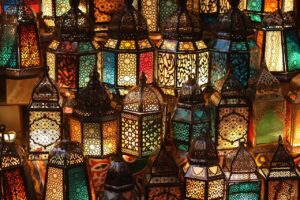
One of the most striking aspects of Maghrebi fashion is its use of bold, vibrant colors and intricate patterns. From the geometric designs of the zellige tiles found in Moroccan architecture to the delicate floral motifs of Algerian carpets, these patterns have long been an essential part of Maghrebi culture and identity.
At the ‘Contemporary Muslim Fashions’ exhibit, several designers showcased their interpretation of these patterns, incorporating them into their designs in innovative and captivating ways. For example, Moroccan designer Hafida Elalamy’s collection featured elegant, flowing gowns adorned with intricate embroidery inspired by traditional Moroccan textiles. Meanwhile, Tunisian designer Ayman Amani’s designs were characterized by bold, geometric patterns that paid homage to the rich history of Tunisian art and architecture.
The use of colors in Maghrebi-inspired fashion is equally as captivating. Bright, bold hues such as cobalt blue, fiery red, and emerald green are often used to create eye-catching contrasts and add a touch of elegance to the designs. At the exhibit, these colors were beautifully showcased in the work of Moroccan designer Ouidad Mokhtari, whose stunning gowns featured intricate embroidery and bold, vibrant colors that celebrated the beauty of Maghrebi fashion.
The Role of Empowerment in Maghrebi-Inspired Fashion
In recent years, there has been a growing movement within the Islamic fashion world to challenge traditional gender norms and promote female empowerment. This is evident in the designs showcased at the ‘Contemporary Muslim Fashions’ exhibit, which embraced the beauty and strength of the female form and challenged conventional notions of modesty.
One such designer is Algerian-French designer Amina Agueznay, whose designs are characterized by a strong, feminine aesthetic that empowers women to embrace their individuality and self-expression. Agueznay’s work is a testament to the power of fashion as a tool for social and cultural change.
Another designer who has made a significant impact in the world of Maghrebi-inspired fashion is Moroccan designer Noura Eltawil. Eltawil’s designs are characterized by their bold, edgy aesthetic, which challenges conventional ideas of what it means to be a modest Muslim woman. Her designs often feature cut-outs, bold prints, and unconventional silhouettes, demonstrating that modesty and self-expression can coexist harmoniously.
The ‘Contemporary Muslim Fashions’ exhibit also featured the work of Moroccan designer Noura Kerr, whose designs celebrate the beauty and strength of the female form. Kerr’s designs, which often feature flowing, flowing silhouettes and delicate embroidery, empower women to embrace their femininity and celebrate their individuality.
The Intersection of Art and Activism in Maghrebi-Inspired Fashion
In addition to its aesthetic appeal, Maghrebi-inspired fashion has also become a powerful platform for social and political activism. At the ‘Contemporary Muslim Fashions’ exhibit, several designers showcased their commitment to addressing social issues through their designs, using fashion as a means of raising awareness and promoting change.
One such designer is Algerian-French designer Amina Khadraoui, whose designs often feature political slogans and messages of resistance. Khadraoui’s work is inspired by the struggles of her community and is aimed at raising awareness about social and political issues faced by the Maghrebi diaspora.
Another designer who uses her work to address social issues is Moroccan-Belgian designer Sarah Bella Laksouar. Laksouar’s designs often feature bold, political messages and are aimed at challenging conventional ideas about women’s roles in society. Her work is a testament to the power of fashion as a tool for social and political activism.
A Call to Action: Celebrate and Support Maghrebi-Inspired Fashion
The ‘Contemporary Muslim Fashions’ exhibit was a powerful celebration of the artistic, cultural, and social dynamism of the Islamic world, with Maghrebi-inspired fashion taking center stage. As the fashion world continues to evolve and embrace diversity, it is essential that we continue to support and celebrate the work of designers like Azzedine Alaïa, Amina Agueznay, Noura Eltawil, Noura Kerr, Amina Khadraoui, and Sarah Bella Laksouar, who are pushing the boundaries of fashion and redefining what it means to be a Muslim designer.
If you are a member of the Maghrebi diaspora, we encourage you to support these designers by purchasing their work, following them on social media, and sharing their designs with your network. By doing so, you can help promote the beauty and richness of Maghrebi fashion and contribute to the continued evolution of the Islamic fashion industry.
You might also enjoy
Related Articles
- Embracing Modernity: A Fresh Perspective on Modest Muslim Fashions at the de Young Exhibit
- Exploring the ‘Right to Salt’ Tradition in Maghrebi Culture: A Cultural Legacy Worth Preserving
- Empower Your Style: 5 Modern Moroccan Fashion Trends for Women
- Halal Fest: Celebrating the Vibrant World of Maghrebi Culture through Food and Tradition
- Spotlight on Fashion Entrepreneurship: Maghrebi Students’ Triumphs in Europe