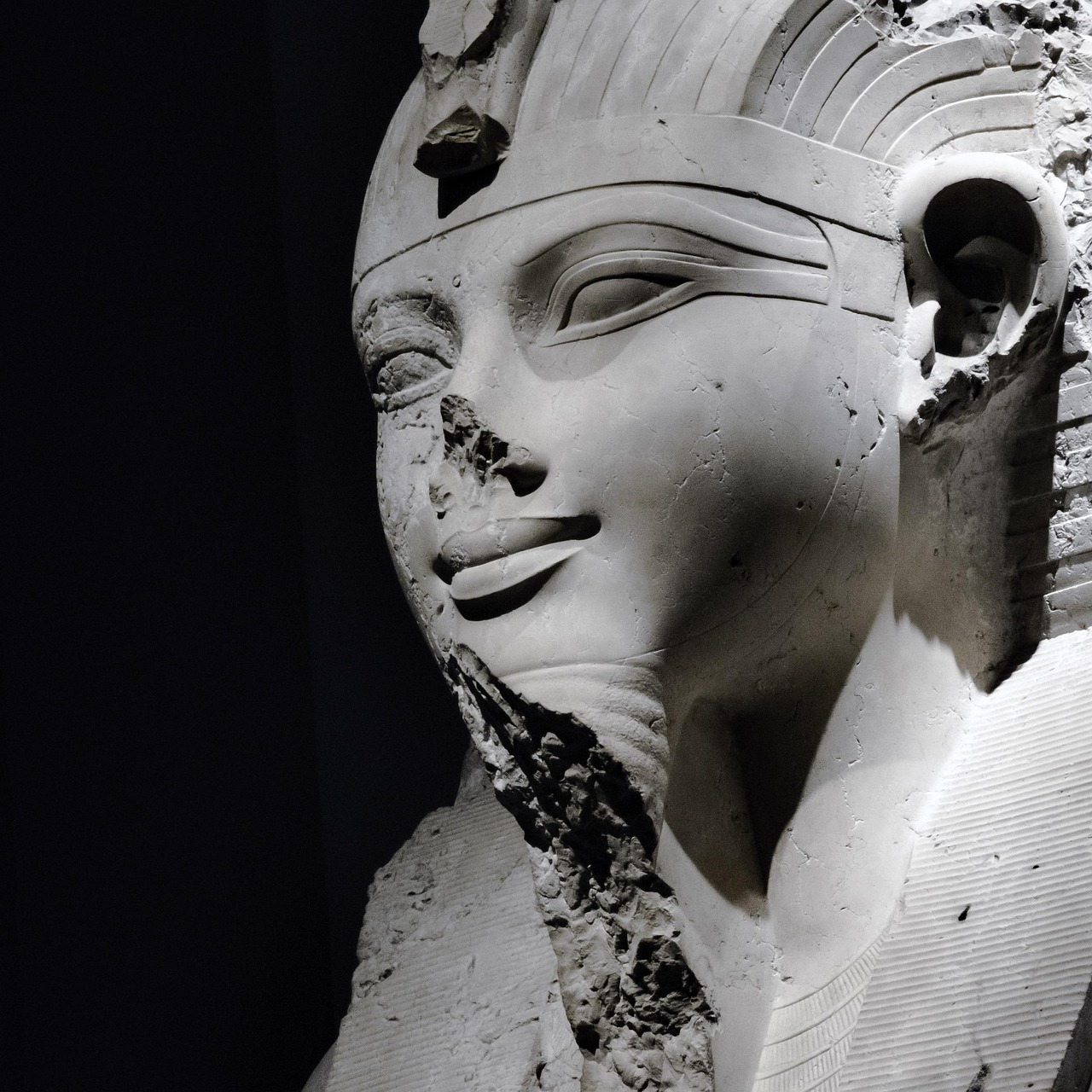
Exploring Ancient Phoenician and Egyptian History in North Africa: A Journey Through Time for the Maghrebi Diaspora
Welcome, dear readers of the Maghrebi diaspora! As we embark on this enlightening journey through time, let us rediscover the rich history that has shaped our ancestral lands in North Africa. This article aims to delve into the captivating stories of the ancient Phoenicians and Egyptians who left indelible marks on our region.
Phoenician Presence in North Africa
The Phoenicians, a maritime civilization that thrived along the eastern Mediterranean coast from around 1500 BCE to 300 BCE, extended their reach as far west as modern-day Tunisia and Morocco. Their influence is evident in various archaeological sites such as Carthage, Utica, and Dougga.
Carthage, the most famous Phoenician city in North Africa, was founded around 814 BCE by Elissar, a Tyrian prince. The city would go on to become one of the greatest powers in the Mediterranean during the Classical period, engaging in significant conflicts with Rome (Punic Wars). This period saw the rise and fall of mighty empires, with Carthage playing a crucial role as a trading hub.
Utica, located near modern-day Tunis, was another crucial Phoenician settlement. Originally named Oea by the Phoenicians, it served as a vital trading hub and eventually became a Roman colony. The city’s strategic location made it an important stopover for merchants and travelers alike.
Egyptian Influence in North Africa
The ancient Egyptians’ impact on North Africa dates back to at least the Old Kingdom period (circa 2686-2134 BCE) when they established trade relationships with the Libyan desert tribes. By the New Kingdom (circa 1570-1069 BCE), Egypt had extended its control over parts of present-day Libya, as seen in the reign of pharaoh Thutmose III.
During the Ptolemaic Dynasty (323-30 BCE), Egypt’s influence expanded further into North Africa. The city of Cyrene in present-day Libya was founded by Egyptian colonists around 631 BCE and became a significant cultural and intellectual center. This period saw a blending of cultures, with Egyptian art, architecture, and literature influencing the region.
Another notable Egyptian presence can be found at the oasis town of Siwa, located deep in the Western Desert of Egypt. The oracle of Amun at Siwa was consulted by several prominent figures, including Alexander the Great, who sought confirmation of his divine origin there. This sacred site remained an important center of worship and pilgrimage for centuries.
Carthage and Rome: The Punic Wars
The three Punic Wars (264-146 BCE) between Carthage and Rome were a series of conflicts that significantly shaped the Mediterranean world. These wars began when Carthage, allied with Hannibal, invaded Italy, causing major disruptions in Roman territory.
The first Punic War primarily focused on naval battles as both sides tried to gain control of the Mediterranean. Rome’s eventual victory forced Carthage to pay a large indemnity and disband its navy. This war marked the beginning of a long-standing rivalry between the two powers.
The second Punic War, led by Hannibal, saw him cross the Alps with his army, including elephants, in one of history’s most famous military maneuvers. Despite initial successes, Hannibal’s forces were eventually defeated by Rome. This war solidified Rome’s dominance over the Mediterranean and marked the decline of Carthage.
The third Punic War (149-146 BCE) saw the complete destruction of Carthage, marking the end of an era in North African history. The Roman conquest brought vast changes to the region, as it was divided into several provinces including Africa Proconsularis, Numidia, Mauretania Tingitana, and Mauretania Caesariensis.
Roman Conquest and Legacy
Following the Roman conquest, North Africa saw a blend of cultures as Romans, Phoenicians, and indigenous populations intermingled. The region was transformed by the construction of roads, aqueducts, and cities, which still impact our lives today.
The Roman legacy extends beyond architectural achievements to the spread of Christianity throughout the region. Early Christian figures like Tertullian, Cyprian of Carthage, and Augustine of Hippo played significant roles in the development of Christian theology.
Christianity in North Africa
During the 3rd and 4th centuries CE, Christianity began to spread throughout North Africa. The Vandal conquest of Rome’s African provinces in the 5th century CE marked a period of upheaval. However, Christianity continued to thrive, with the Council of Carthage playing a crucial role in the development of Western Christianity.
As we delve into our ancestral history, let us take pride in the rich cultural heritage that connects us across generations and continents. Embrace your roots, learn from the past, and carry forward the traditions of the Phoenicians, Egyptians, Romans, and Christians who have all left their mark on North Africa.
You might also enjoy
Related Articles
- Family Trips to North Africa: A Practical Guide for the Maghrebi Diaspora
- Maximizing Your Travel to the Middle East & North Africa with Miles: A Comprehensive Guide for the Maghrebi Diaspora
- Ebola Concerns in North Africa: A Comprehensive Guide for the Maghrebi Diaspora
- Travel Advisory for the Middle East North Africa (MENA) Region: Essential Tips for the Maghrebi Diaspora
- Rediscovering Roots: Young French Jews Exploring Their Maghrebi Heritage – An Empowering Journey