Here is the improved HTML article:
Ramadan is a time of warmth, love, and unity for families and communities across the Muslim world, but in North Africa, it’s couscous that truly brings people together. From the bustling souks of Morocco to the ancient medinas of Algeria and Tunisia, this beloved dish has been a staple of Maghrebi cuisine for centuries. As the sun sets on this sacred month, families gather around the table to break their daylong fast with a feast that’s both nourishing and flavorful. Here, we’ll share the definitive recipe for Ramadan’s iconic couscous – a dish that embodies the spirit of togetherness and celebrates the rich cultural heritage of the Maghreb.
History
Couscous has been a part of North African cuisine for over 1,000 years, with its origins tracing back to the Berber people who first cultivated this nutritious grain. Each region has its own unique variation – Moroccan couscous is famous for its seven vegetables and tender lamb, Algerian couscous is spicier with merguez sausages, while Tunisian couscous often features fish on the coast. However, during Ramadan, these regional differences fade away as families come together to share this comforting dish at the Iftar meal breaking their daylong fast.
Ingredients (serves 6)
- 500 g medium-grain couscous
- 800 g bone-in lamb shoulder
- 3 medium carrots, peeled and chopped
- 3 medium courgettes, sliced
- 2 medium turnips, peeled and chopped
- 400 g canned chickpeas
- 2 large tomatoes, diced
- 1 large onion, finely chopped
- 4 tbsp olive oil
- 2 tsp ras el hanout
- 1 tsp ground coriander
- 1 tsp ground cumin
- ½ tsp ground cinnamon
- Salt and black pepper to taste
- Fresh coriander leaves for garnish
- 4 merguez sausages (optional)
- 2 large sea bream or monkfish fillets (optional)
- 100 g capers (optional)
Step-by-Step Instructions
Prep time: 25 minutes | Cook time: 1 hour 30 minutes | Difficulty: Medium
- Brown the lamb: heat 2 tbsp of olive oil in the bottom of a large heavy pot over medium-high heat. Add the lamb pieces and brown on all sides, about 8 minutes total.
- Build the broth: in the same pot, fry the onion until soft and golden, about 5 minutes. Add the ras el hanout, cumin, coriander, and cinnamon, stir for 30 seconds until fragrant. Return the lamb, add 1.5 litres of water, season generously with salt and pepper.
- Add the merguez sausages (optional): if using, add now, reducing heat to medium-low and simmer gently for 30 minutes until cooked through.
- Prepare the base broth: increase heat to medium-high and bring to a boil. Reduce to a gentle simmer and cook for another 1 hour, skimming off any impurities as they rise to the surface.
- Add the vegetables in stages: after an hour of simmering, add the carrots, turnips – they need the most time. After another 20 minutes, add the tomatoes, courgettes, and chickpeas. Taste the broth and adjust seasoning.
- Add fish (optional): if using, add the fish fillets at this stage and cook for 15 minutes until opaque and cooked through.
- Cook the couscous: in a large bowl, combine the couscous with a drizzle of olive oil. Add water gradually and use your hands to gently work it through the grains until evenly coated. Cover with cling film and let sit for 5 minutes.
- Steam the couscous: place couscous in the top of a couscoussier and steam over the broth for 20 minutes. Remove, break up any clumps with a fork, add a knob of butter, and return to steam a further 10 minutes until perfectly fluffy.
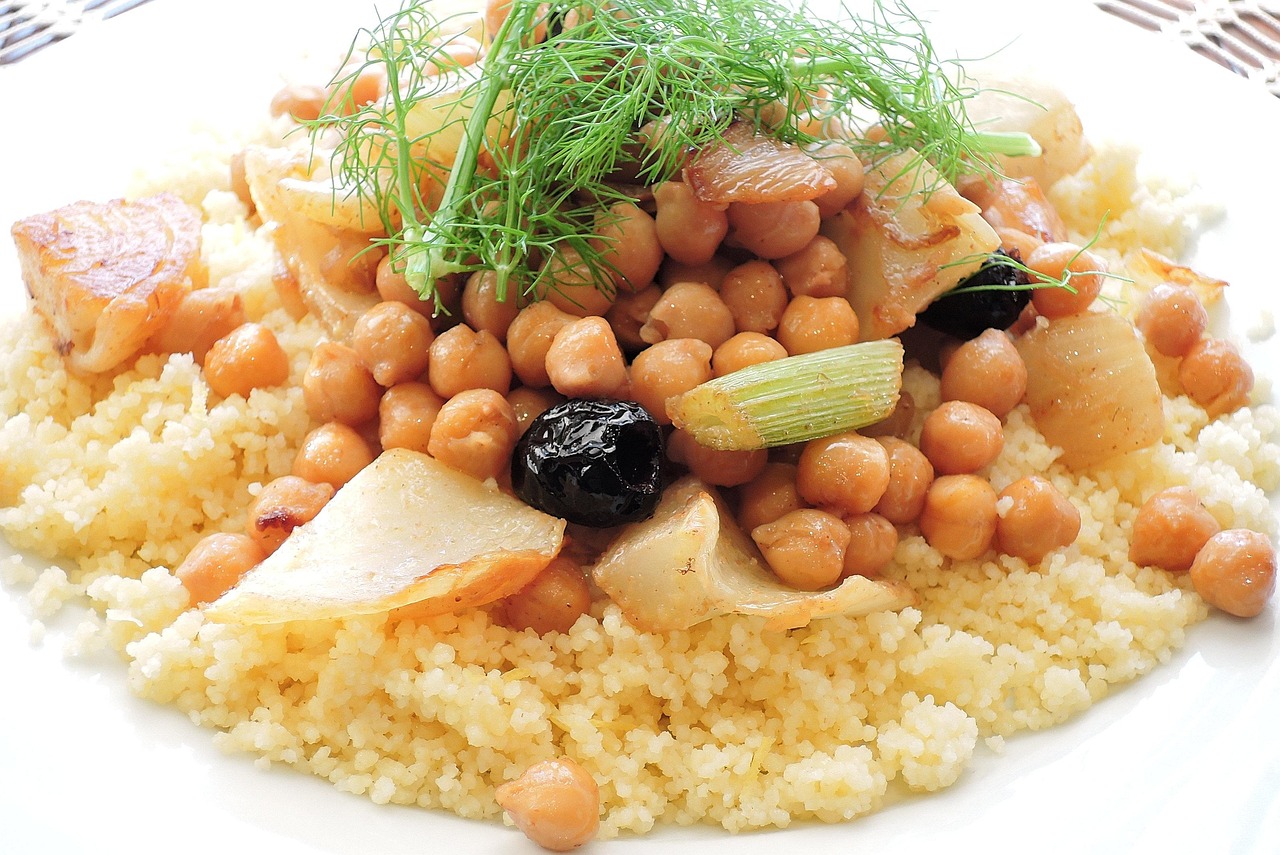
- Serve: mound the couscous in a large communal dish, garnish with fresh coriander leaves. Ladle the broth into separate bowls for guests to pour over as they like. Harissa on the side is non-negotiable.
Tips for Success
The difference between good couscous and great couscous usually comes down to a few small details that experienced cooks know by instinct. Here are some expert tips to help you achieve perfection:
- Never stir couscous while it steams – lift and fluff gently with a fork only after removing from heat
- If grains are clumping, add a tiny drizzle of olive oil and work it in with your fingertips
- The broth should be fragrant and slightly reduced – if it tastes thin, simmer uncovered 10 minutes before serving
- For Ramadan: make a double batch of broth – it reheats beautifully and improves overnight
- Leftovers keep 3 days in the fridge; store couscous and broth separately
Regional Variations
The Algerian version often adds merguez sausages and uses more harissa in the broth for a spicier profile. In Tunisia, couscous is frequently made with fish and capers on the coast.
Serving
Serve this Ramadan-inspired dish as a celebration of your shared heritage, inviting friends and family to break bread together in unity and harmony. Gather around the table, share stories, and savor the warmth and love that comes from sharing a meal with those you cherish.
Conclusion
Couscous is the dish that says home like no other in Maghrebi culture. During Ramadan, it transcends borders as families come together to share this comforting dish at the Iftar meal. Once you make it from scratch, you’ll never go back to the instant version. Try this recipe this Ramadan and share your photos in the comments below!
You might also enjoy
Related Articles
- Traveling within North Africa: A Comprehensive Guide for a Safe and Enriching Journey
- Beef and Couscous Stuffed Baby Bell Peppers: A Healthy Meal Option for Maghrebi Diaspora
- Grilled Chicken Skewers with Lemon Couscous Salad: A Modern Maghrebi Feast
- Morocco Fashion Week 2026: A Celebration of North African Design and Innovation
- DIY Natural Hair Care with Nigelle Oil: A Comprehensive Guide for the Maghrebi Diaspora