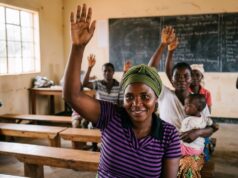
Empowering Women Across the Arab World: An Assessment of Health and Empowerment Amongst the Maghrebi Diaspora
In many ways, the Arab world is at a crossroads when it comes to empowering women. On one hand, there have been significant strides made in recent years to address gender disparities and promote greater equality between men and women. However, on the other hand, there are still numerous challenges that must be overcome before we can truly say that women are fully empowered across the region.
Education: Bridging the Gap for Women
The importance of education in empowering women cannot be overstated. In many Arab countries, girls and young women face significant barriers to accessing quality education, including cultural norms that prioritize boys’ education, economic constraints that make it difficult for families to afford schooling, and a lack of resources and infrastructure that can support the growth of girls-only schools.
For example, Morocco has made significant strides in increasing female enrollment rates at primary and secondary levels, with over 90% of girls completing their secondary education. However, challenges remain at the tertiary level, where women are still underrepresented in higher education and professional fields. The Maghrebi diaspora can play a crucial role in addressing these issues by supporting educational initiatives that prioritize girls’ and women’s education, such as scholarships for girls from low-income families and mentorship programs that connect young women with professionals in their desired field.
- Supporting scholarships for girls in need through organizations like the Moroccan Non-Governmental Organization (NGO) “Education Without Borders”
- Promoting awareness about the importance of education within communities by partnering with local schools and community centers to provide educational resources and workshops
- Participating in or sponsoring educational conferences and events, such as the annual Morocco-USA Education Conference, which brings together educators, policymakers, and entrepreneurs to share best practices and showcase innovative solutions
Employment: Closing the Gender Wage Gap
In many Arab countries, women face significant barriers to accessing employment opportunities, including discrimination in the workplace, limited job training programs, and a lack of representation in professional fields. The gender wage gap is particularly pronounced in countries such as Algeria and Tunisia, where women earn on average 30% less than men for doing the same work.
The Maghrebi diaspora can play a crucial role in addressing these issues by supporting job training programs that prioritize women’s employment, advocating for equal pay and fair employment practices, and connecting with organizations that offer mentorship opportunities for women in the workplace.
- Supporting vocational training centers for women through organizations like the Tunisian NGO “Women in Development” (WID)
- Connecting with organizations that offer mentorship opportunities for women in the workplace, such as the Moroccan organization “Empowering Women”
- Advocating for equal pay and fair employment practices in businesses both within and outside of the diaspora community through initiatives like the Arab Woman Organization’s (AWO) campaign to end gender-based violence at work
Reproductive Rights: Advocating for Choice and Access
Access to comprehensive reproductive healthcare, including family planning services, is essential for women’s empowerment. However, many Arab countries have strict laws regarding abortion and contraception, which can limit women’s ability to make informed decisions about their own bodies.
The Maghrebi diaspora can play a crucial role in supporting organizations that advocate for women’s reproductive rights by donating funds or volunteering time to organizations like the Moroccan Family Planning Association (MFPA) and the Tunisian League for Women’s Rights (TLWR).
- Supporting NGOs that provide safe, affordable family planning services through initiatives like the United Nations Population Fund (UNFPA)’s “Harm Reduction” program
- Raising awareness about the importance of comprehensive sexual and reproductive healthcare within communities by partnering with local health centers and community organizations to provide educational resources and workshops
- Advocating for changes in laws and policies that restrict women’s access to reproductive healthcare through initiatives like the Arab Women’s Network (AWN) campaign to decriminalize abortion
Socio-Political Influence: Amplifying Women’s Voices
Women’s participation in politics and decision-making processes is crucial for their empowerment. However, women in many Arab countries are underrepresented in political leadership roles, with some countries having as few as 5% of women in parliament.
The Maghrebi diaspora can play a crucial role in amplifying women’s voices by supporting organizations that promote gender equality in politics and advocating for greater representation of women in leadership positions within their communities.
- Supporting political parties or candidates with a focus on gender equality through initiatives like the Arab Women’s Network (AWN) campaign to elect more women to parliament
- Promoting awareness about the importance of women’s participation in politics within communities by partnering with local schools and community centers to provide educational resources and workshops
- Advocating for changes in laws and policies that limit women’s political representation through initiatives like the United Nations Development Programme (UNDP) “Gender and Politics” program
Conclusion: Empowering Women Together
The empowerment of women across the Arab world is a collective responsibility, one that requires the active participation of individuals and organizations both within and outside of the region. The Maghrebi diaspora has a unique opportunity to contribute to this effort by leveraging their resources, connections, and influence.
Join us in empowering women through education, employment, reproductive rights, and socio-political influence. Together, we can create a more equitable future for all.
You might also enjoy
Related Articles
- Empowerment Lessons from Living Among Arab Women: Inspiring Stories from the Maghrebi Diaspora
- Learning Empowerment Lessons from Arab Women in Daily Life: Inspirations for the Maghrebi Diaspora
- Hadassah’s Guide to Breast Cancer Screening for Arab Women: Empowering the Maghrebi Diaspora
- Empowering Women’s Health in the Maghreb: A Comprehensive Overview
- Reflecting on a Decade Since the Arab Spring: Evaluating Women’s Rights Progress in the Maghreb